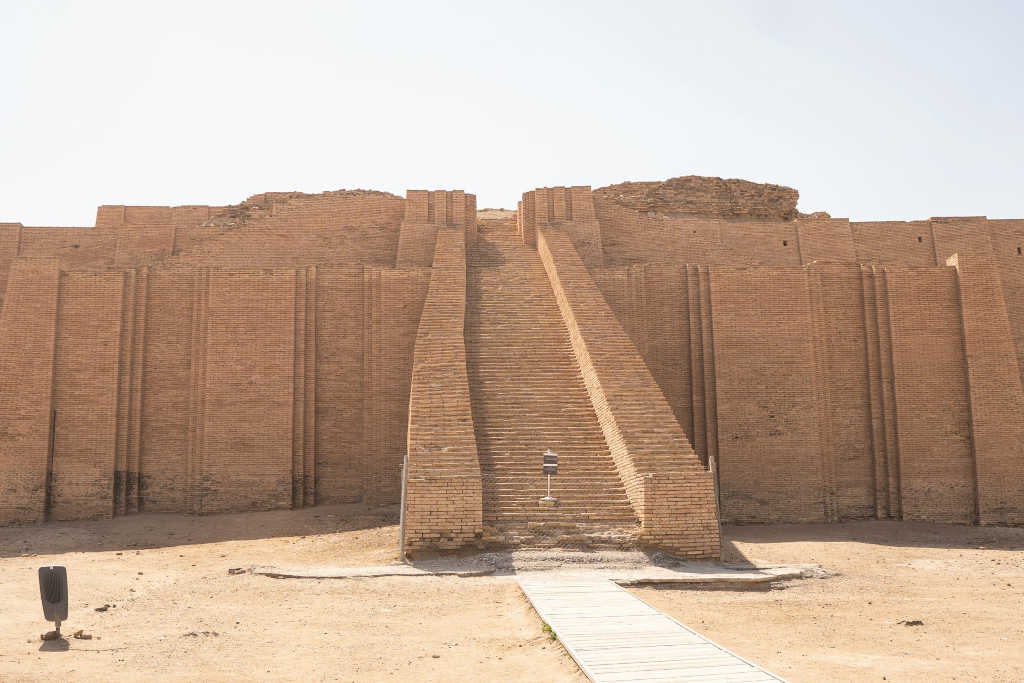
Mesopotamia was where humans first wrote, built cities, and developed advanced civilizations. The fertile land nourished by the Tigris and Euphrates rivers became the first stage in human history.
In this land, people believed gods ruled, magnificent temples were built, and complex social systems were established. People studied celestial movements, created calendars, and developed sophisticated mathematics.
What kind of lives did the people of Mesopotamia lead in ancient times?
In this article, we will unravel the story of Mesopotamian civilization, which heralded the dawn of human civilization, and explore its fascinating aspects.
Birth of Agricultural Civilization
Around 9000 BCE, the first agricultural civilization in human history emerged in the Fertile Crescent. This became the beginning of Mesopotamian civilization. The cultivation of wheat and barley was practiced, and villages gradually formed.
Several theories have been proposed as to why humans transitioned from hunting and gathering to agriculture:
- Climate change: The end of the Ice Age and warming climate made agriculture necessary for stable food supplies.
- Population growth: As groups grew larger, hunting and gathering alone became insufficient for food.
- Accidental discovery: The development of agriculture may have been prompted by accidental discoveries, such as seeds sprouting after being accidentally scattered.
Supplementary Information: Mesopotamia: A geographical term referring to the region between the Tigris and Euphrates rivers. Occupying part of the Fertile Crescent, it was the center of ancient Mesopotamian civilizations such as Sumerian and Akkadian.
Fertile Crescent: Refers to a broader region, including not only Mesopotamia but also Syria, Palestine, and Egypt.
Development of Irrigation Agriculture
Around 5500 BCE, irrigation agriculture flourished, enabling stable food production and greatly supporting the development of civilization.
Irrigation agriculture is farming that does not rely on rain but uses artificially created waterways and dams to draw water for growing crops.
The construction and maintenance of large-scale waterways required considerable labor. Therefore, people cooperated as communities, strengthening social connections.
Agriculture is greatly influenced by natural cycles such as rainy and dry seasons. The people of Mesopotamia observed celestial movements and created accurate calendars to determine the timing of agricultural work.
Birth of City-States
Irrigation agriculture, which enabled stable food production, promoted population growth and urban development. Being able to store surplus food allowed some people to engage in occupations other than farming. This became a factor accelerating the development of civilization.
Through this process, city-states were built by the Sumerians around 4000 BCE. Ur, Uruk, and Lagash are representative city-states. These city-states each had their own kings and temples, developing their own cultures and religions.
The city-states sometimes formed alliances and sometimes fought each other, laying the foundations of Mesopotamian civilization.
Birth of Cuneiform Writing
Cuneiform writing emerged around 4000 BCE when city-states began to form. It continued to be used for over 3000 years, until around 100 BCE.
By around 2500 BCE, it had developed into Sumerian script with about 1000 characters, enabling the description of more complex content. Sumerian script was used to write not only the Sumerian language but also various languages such as Akkadian and Persian.
Cuneiform is one of the world’s oldest writing systems, invented by the Sumerians, and played an important role in human history. Its emergence announced the beginning of written civilization and has had a significant impact on us even in modern times.
Lagash-Umma War (Circa 2500 BCE to 2300 BCE)
This was a war between the Sumerian city-states of Ur and Lagash, located in southern Mesopotamia. Both cities frequently clashed over water resources and territory, and these conflicts are known as one of the earliest recorded wars in Mesopotamian history.
Establishment of the Akkadian Kingdom
Around 2500 BCE, Semitic Akkadians migrated to Mesopotamia. The Akkadians absorbed Sumerian culture while developing their own language and culture.
In 2334 BCE, Sargon I established the Akkadian Kingdom and unified the city-states of Mesopotamia. The Akkadians were able to unify Mesopotamia in a short period due to their superior military power.
Regarding the origins of the Akkadians, there is no clear answer yet, and various theories have been proposed:
- One theory states they were descendants of Semitic nomads from within the Mesopotamian region, especially the northern part. According to this theory, the Akkadians expanded their power by incorporating surrounding nomadic people in the process of unifying Mesopotamian city-states.
- Another theory suggests they were a people who invaded from outside Mesopotamia. According to this theory, the Akkadians invaded Mesopotamia from the Arabian Peninsula or the Syrian region and conquered the Sumerian city-states.
The origin of the Akkadians remains a mystery, but there is no doubt that they played an important role in Mesopotamian history. The emergence of the Akkadians had a significant impact on the development of Mesopotamian civilization and later had a great influence on the ancient Oriental world.
Downfall of the Akkadian Kingdom
The Gutians invaded the Akkadian Kingdom and, after a long struggle, destroyed the Akkadian Kingdom around the 22nd century BCE (2154 BCE). The Gutians are believed to have descended from northern Mesopotamia and took advantage of the weakening Akkadian Kingdom to invade.
While the Gutian invasion was the direct cause, several factors are considered to have contributed to the downfall of the Akkadian Kingdom:
Factors in the Downfall of the Akkadian Kingdom:
- Burden of Imperial Expansion: The Akkadian Kingdom unified Mesopotamia and built a great empire, but maintaining and managing such vast territory required enormous resources and effort. This burden may have depleted the nation’s strength.
- Frequent Rebellions: Rebellions from conquered regions frequently threatened the stability of the empire.
- Drawbacks of Centralization: As the centralized system strengthened, governance of local regions became less effective, possibly leading to increased resistance from remote areas.
- Climate Change: Recent research has revealed that severe drying occurred during the period of the Akkadian Kingdom’s downfall. This climate change may have damaged agriculture, contributing to the decline of national power.